

 Palindrome Technologies
Research on Heterogeneous Networks
 Palindrome Technologies : Sep 30, 2024, 4:24:52 PM
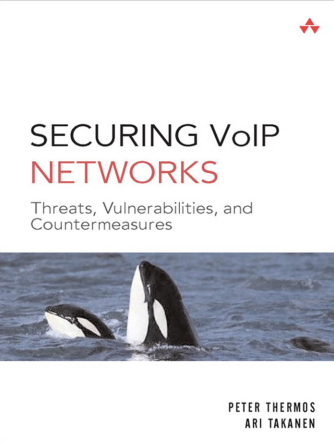
Securing VoIP Networks presents a rigorous analysis of the security landscape surrounding Voice over IP (VoIP) and converged network infrastructures. Authored by Peter Thermos and Ari Takanen, this text moves beyond deployment basics to provide a foundational taxonomy of threats, a deep dissection of protocol vulnerabilities, and a scientifically grounded framework for countermeasures. It serves as a critical resource for researchers, security architects, and network engineers, offering empirical evidence of vulnerabilities in signaling (SIP, H.323) and media (RTP) protocols and proposing architectural defenses aligned with international standards.
The authors establish a structured classification system for VoIP-specific threats, distinguishing between generic IP network attacks and those unique to multimedia communications.
Service Disruption: Analysis of Denial of Service (DoS) vectors targeting VoIP infrastructure, including flooding attacks against SIP proxies, resource exhaustion in embedded devices, and protocol-specific exploits.
Eavesdropping & Traffic Analysis: Examination of methods to intercept signaling and media streams, quantifying the risks of passive monitoring and active interception (e.g., ARP poisoning, VLAN hopping) to capture sensitive voice data.
Masquerading & Impersonation: Detailed study of identity theft techniques within VoIP, such as Caller ID spoofing and SIP registration hijacking, highlighting weaknesses in default authentication mechanisms.
Fraud: Investigation of service theft and toll fraud, analyzing how manipulation of signaling flows and billing records can lead to significant financial loss.
The book provides a deep technical dive into the vulnerabilities inherent in standard VoIP protocols, supported by vulnerability research and testing methodologies.
Signaling Vulnerabilities: Critical analysis of SIP, H.323, and MGCP, identifying specific flaws such as lack of integrity protection, weak authentication exchanges, and susceptibility to malformed message attacks.
Media Vulnerabilities: Evaluation of the Real-time Transport Protocol (RTP) and its susceptibility to injection, replay, and unauthorized monitoring.
Software & Implementation Flaws: Classification of software vulnerabilities affecting VoIP systems, including buffer overflows, race conditions, and input validation errors, aligning with broader taxonomies like CWE and OWASP.
The text details the theoretical operation and practical application of cryptographic protocols designed to mitigate identified threats.
Signaling Protection: In-depth coverage of Transport Layer Security (TLS), IPSec, and S/MIME for securing signaling pathways, including a comparative analysis of their performance, scalability, and limitations in VoIP environments.
Media Encryption: Technical breakdown of the Secure Real-time Transport Protocol (SRTP), explaining key derivation, packet authentication, and encryption transforms (AES-CM, F8).
Key Management Protocols: Analysis of key exchange mechanisms essential for secure media, including MIKEY, SDES (Security Descriptions), and ZRTP, evaluating their suitability for unicast and multicast environments.
Moving from analysis to synthesis, the book proposes robust security frameworks for diverse deployment scenarios.
Enterprise Architectures: Strategies for securing enterprise VoIP deployments, emphasizing network segmentation (VLANs), access control (802.1x), and alignment with ISO 17799/27001 standards.
Carrier-Grade Security: Examination of service provider architectures, including the IP Multimedia Subsystem (IMS), and the deployment of Session Border Controllers (SBCs) to enforce security policies at network boundaries.
Defense-in-Depth: Advocacy for a layered security approach, integrating physical security, network hardening, and application-level protection mechanisms.
Peter Thermos: CTO at Palindrome Technologies and a recognized researcher in information security. He holds a Master's degree in Computer Science from Columbia University and has contributed significantly to the security community through the discovery of product vulnerabilities and the development of security tools like SiVuS.
Ari Takanen: Founder and CTO of Codenomicon, with a research background from the Oulu University Secure Programming Group (OUSPG). His work focuses on robust testing of protocol implementations and the proactive discovery of security flaws in critical infrastructure.
Palindrome Technologies : Oct 22, 2024, 12:47:52 PM
The Java programming language has been one of the most popular programming languages for years. Starting in 2015, a flaw in a core function of the...
Palindrome Technologies : Aug 8, 2025, 12:36:23 PM
The Walls Have Ears: Why Your Penetration Testing Is Stuck in the Past Penetration testing has long been a vital tool in our cybersecurity arsenals,...
Palindrome Technologies : Jun 19, 2025, 11:49:31 AM